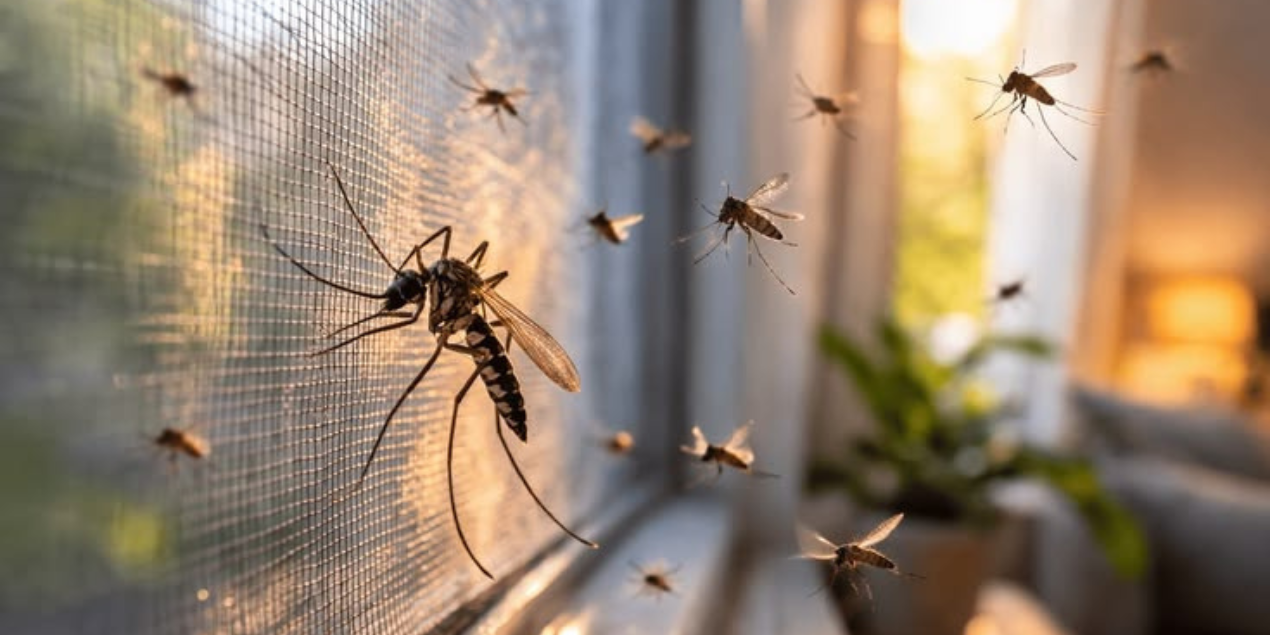
Malaria is a mosquito-borne disease transmitted through the bite of infected Anopheles mosquitoes. These mosquitoes are generally more active from evening through nighttime, making mosquito prevention around bedrooms, living areas, and outdoor spaces an important part of household protection.
Standing water and suitable breeding environments around the home can contribute to mosquito populations. Regularly checking water containers, drains, outdoor areas, and other places where water may collect can help reduce potential mosquito breeding sites.
Better malaria prevention starts with reducing mosquito exposure. Managing breeding areas, limiting mosquito entry, and maintaining consistent nighttime protection can help create a better-protected home.
Mosquitoes can enter through open doors, windows, and other gaps before resting in indoor spaces. Combining environmental management with appropriate personal and household mosquito-protection measures can help reduce the chances of mosquito bites.
Build Better Nighttime Protection Against Malaria Mosquitoes
Protecting your household requires consistent mosquito-prevention habits, particularly during evening and nighttime hours. A combination of cleaner surroundings, reduced breeding opportunities, and suitable protection methods can help lower mosquito exposure.
- Reduce standing water:Regularly inspect and manage containers, drains, coolers, tanks, and outdoor areas where water may remain for extended periods.
- Limit mosquito entry:Use suitable screens on windows and doors where possible and reduce unnecessary openings during periods of increased mosquito activity.
- Keep sleeping areas protected:Consider recommended measures such as insecticide-treated bed nets where appropriate, particularly in areas where malaria transmission is a concern.
- Strengthen evening protection:Pay additional attention to bedrooms, balconies, verandas, and living spaces from evening through nighttime.
- Use suitable mosquito-control products:Redfos Mosquito & Fly Killer, Micro-Smoke Coil, Low-Smoke Coil, and Mosquito Coil can form part of a household mosquito-management routine where appropriate. Always follow the individual product label, precautions, ventilation guidance, and intended-use instructions.
Effective malaria prevention requires more than occasional mosquito control. Reducing breeding opportunities, limiting mosquito entry, protecting sleeping areas, and following recommended mosquito-bite prevention practices can help lower exposure. If anyone develops fever, chills, or other symptoms that may be associated with malaria, seek medical evaluation promptly.